How Do Braces Work & How Long Do They Take?

If you or your child are considering orthodontic treatment, you have probably asked the question that comes before every other one: how do braces work?
Braces are one of the most trusted and time tested ways to straighten teeth, correct bite issues, and set up a smile that lasts a lifetime. Millions of people, from young kids getting their first set of brackets to adults finally addressing crowding they have lived with for years, rely on braces to move teeth safely and predictably. There is a lot that goes into having a straighter smile, including the science behind tooth movement, how long treatment typically takes, the parts that make up a set of braces, and the different types available today. Whether you are a parent researching options for your child or an adult exploring treatment for yourself, it’s important that you have a clear, honest picture of what to expect with braces.
{{ORTHO_TAKEAWAYS}}
How Braces Work To Straighten Your Teeth
The short answer to how braces work is: pressure. Braces apply a steady, controlled force to your teeth, and that force triggers a biological process inside of your jawbone. On the side of the tooth where pressure is applied, bone tissue breaks down slightly to make room for the tooth to shift. On the opposite side, new bone forms to support the tooth in its new position. This process is called bone remodeling, and it happens gradually over the course of treatment as the archwire guides teeth into better alignment within the mouth.
This is also why braces do not immediately shift your teeth. Your body needs time to break down and rebuild bone tissue safely. Moving teeth too fast can damage their roots or the surrounding bone, so orthodontists calibrate the pressure applied by braces and adjust it in stages. Each time you visit for an adjustment, your orthodontist tightens or replaces parts of the archwire system to keep that gentle pressure consistent and effective.
Think of it less like flipping a switch and more like a slow, deliberate renovation. Your teeth cannot be pushed into place all at once. Instead, they are guided by small shifts in a way that respects how bone tissue actually heals and rebuilds.
Understanding how braces work also helps explain why consistent care matters so much during treatment. Skipped appointments, broken brackets, or ignored instructions can slow down the bone remodeling process and extend your timeline. Good braces care – including brushing after meals, avoiding certain hard or sticky foods, and showing up to scheduled adjustments – keeps that steady pressure moving your treatment forward on schedule.
How Long Does It Take For Braces To Work?
One of the most common questions people have about braces is how long they take to work. Unfortunately, there is no single answer, because treatment length depends heavily on the condition of your teeth when you start. However, orthodontists generally categorize cases into three levels of complexity.
Mild
Mild cases usually involve small gaps in teeth, minor crowding, or a slight bite misalignment. These cases often see results in as little as six to twelve months, since there is less distance for the teeth to travel and less bone remodeling required overall. Patients with mild cases may also be good candidates for shorter term treatment options, though a full orthodontic exam is the only way to know for sure.
Moderate
Moderate cases involve more noticeable crowding, rotated teeth, or bite issues that affect chewing or speech. Treatment for moderate cases typically runs between twelve and twenty four months, as more adjustments are needed to guide teeth into their final positions. Patients needing moderate corrective care usually need more frequent monitoring to make sure their bite is correcting evenly on both sides.
Severe
Severe cases include significant crowding, large gaps between teeth, or complex bite problems like severe overbites, underbites, or crossbites. These cases can take twenty four to thirty six months, and in some situations may involve additional treatment, such as surgical orthodontics alongside the use of traditional braces. Severe cases often require the most detailed treatment planning, since multiple issues, such as jaw alignment and tooth position, may need to be addressed at the same time.
Your orthodontist will give you a personalized timeline after your first exam, since factors like age, jaw growth, and how well you follow care instructions all play a role in how long braces take to work.
What Are The Main Parts Of Braces?
To fully understand how braces work, it helps to know the individual parts involved. Each piece has a specific job in moving your teeth safely and effectively.
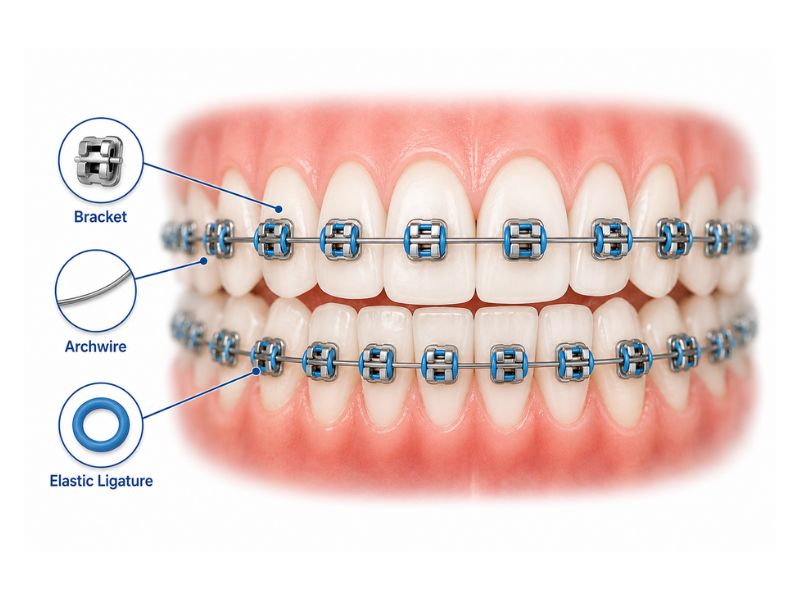
- Brackets: Small pieces attached to each tooth that hold the archwire in place and transfer pressure to the tooth.
- Archwire: The thin metal wire that runs through the brackets and provides the main force that shifts teeth into alignment.
- Elastics (Rubber Bands): Small bands that connect the upper and lower brackets to correct bite alignment issues.
- Ligatures: Small elastic or wire ties that hold the archwire securely inside each bracket.
- Bands: Metal rings are cemented around back molars to anchor the archwire and provide extra support.
- Spacers: Small rubber or metal rings placed between teeth to create room before bands are fitted.
Every part works together as a system. If one piece is missing or damaged – like a loose bracket or a snapped ligature – the whole system loses some of its effectiveness until it is repaired. If something breaks, it is best to call your orthodontist right away, rather than waiting for the next scheduled visit. A small delay in fixing one part can slow progress across the entire treatment plan, since the pressure on the archwire depends on every piece of the assembly doing its job.
The Different Types Of Braces
Not all braces look or feel the same, and understanding the types of braces available can help you choose the right fit for your lifestyle, budget, and comfort level.
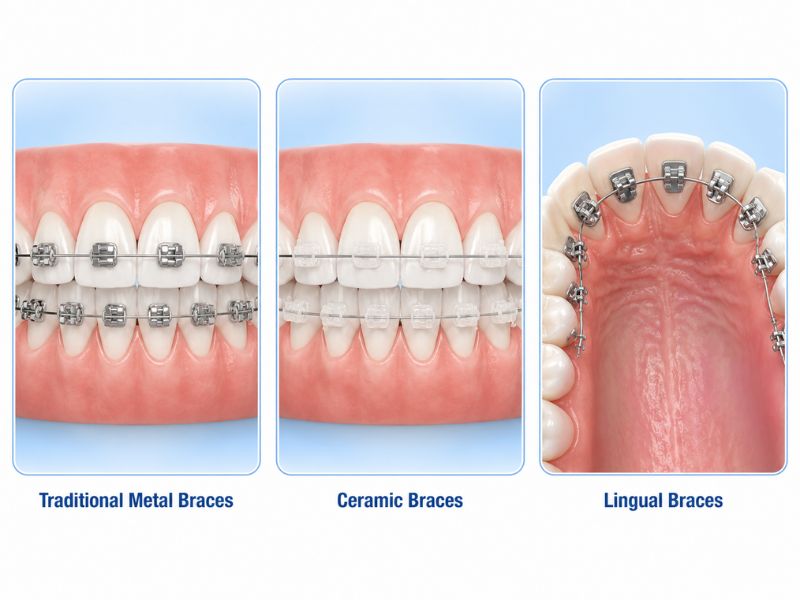
Traditional Metal Braces
Metal braces are the most recognized and often the most affordable option for straightening teeth. They use stainless steel brackets and archwires, and modern versions are smaller and more comfortable than they used to be. Metal braces are highly effective for cases of any severity, from mild to severe, and tend to hold up well for patients who need more complex bite correction over a longer treatment period. Because they are so durable, metal braces for teeth remain a reliable, budget friendly choice for many families.
Ceramic Braces
Ceramic braces work the same way as metal braces, using brackets and archwires to apply pressure, but the brackets are made from a tooth colored or clear material that blends in more with your natural smile. Clear braces like these are a popular choice for teens and adults who want a less noticeable option without giving up the reliability of traditional braces. The tradeoff is that ceramic brackets can be slightly larger and, in some cases, a bit more prone to staining if oral hygiene is not kept up consistently throughout treatment.
Lingual Braces
Lingual braces are attached to the back of the teeth instead of the front, making them essentially invisible from the outside. They work using the same bracket and archwire system, but because of their placement, they can take some getting used to and may require a bit more care to keep clean. Lingual braces are often chosen by adults in professional settings who want effective treatment without a visible change to their smile during the process.
Self-Ligating Braces
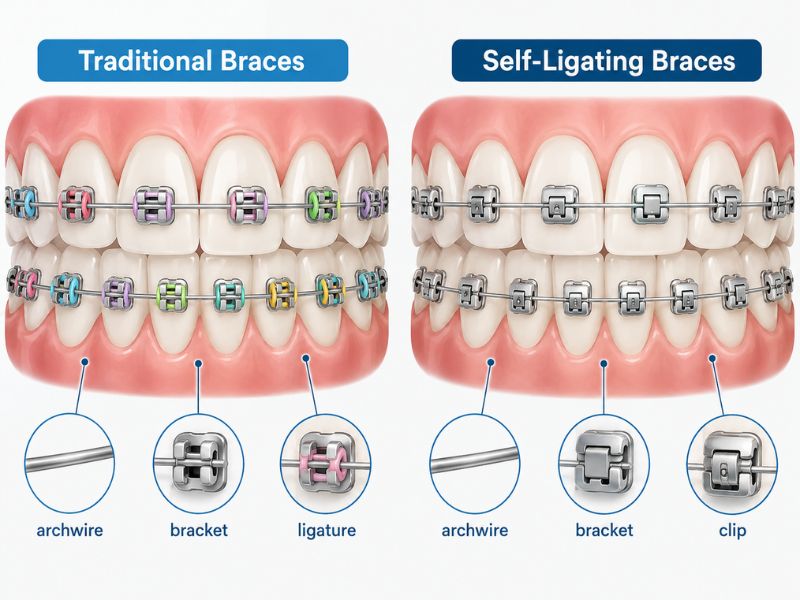
Self-ligating braces use a specialized bracket that holds the archwire in place without the need for elastic ligatures. This can reduce friction, may allow for slightly quicker adjustments, and often means fewer materials trapping food and plaque, which can make braces care a little more manageable day to day. Many patients also find self-ligating brackets more comfortable between visits, since the reduced friction can mean less soreness as the archwire shifts.
Are You Ready For Your Braces?
Now that you have a clear picture of how braces work, how long treatment typically takes, and which type of braces might fit your needs, the next step is simple: book a free consultation.
Every smile is different, and the right treatment plan depends on your specific teeth, your bite, and your goals. At Ortho 99 Plus 1, we believe everyone deserves a straight, healthy smile, and we built our practice around making that access real and affordable for families across Jacksonville. Treatment starts at $99 a month with no down payment, no records fees, and no credit check required, so cost never has to be the reason a family delays care.
Contact Ortho 99 Plus 1 for a free consultation today.
{{ORTHO_FAQS}}
Key Takeaways: How Do Braces Work?
- Braces work by applying gentle, consistent pressure that gradually moves teeth through the jawbone, guiding them into proper alignment over time.
- Treatment length depends on how mild, moderate, or severe the case is, ranging from several months to a few years.
- Braces are made up of several parts working together, including brackets, archwires, and elastics.
- There are several types of braces available today, including metal braces, ceramic braces, lingual braces, and self-ligating options.
- Taking good care of your braces during treatment protects your progress and helps keep your timeline on track.
- Every case is different, which is why a free consultation is the best next step before committing to a treatment plan.
How Do Braces Work: FAQs
How do ceramic braces compare to metal braces in performance?
Ceramic braces and metal braces work through the same underlying process, using brackets and an archwire to apply steady pressure that shifts teeth over time. Performance wise, they are comparable in effectiveness for most cases, including moderate and severe bite corrections. The main differences are cosmetic and practical. Ceramic brackets are less noticeable but can be slightly more fragile and may stain if not cared for properly, while metal brackets are more durable, less prone to breakage, and typically a bit more budget friendly over the course of treatment.
How do self-ligating brackets differ from traditional ones?
Traditional brackets use small elastic or wire ligatures to hold the archwire in place, while self-ligating brackets have a built-in mechanism that holds the wire without those extra ties. This can mean less friction as teeth move, potentially quicker adjustment visits, and easier cleaning since there are fewer components for food and plaque to get caught around. Some patients also report slightly less discomfort with self-ligating systems, since the archwire can move more freely within the bracket.
What is the basic science behind orthodontic tooth movement?
Orthodontic tooth movement relies on a biological process called bone remodeling. When braces apply consistent pressure to a tooth, the bone on the pressure side gradually breaks down while new bone forms on the opposite side, allowing the tooth to shift into a new position over time. This is a slow, controlled process, which is why braces require months or years rather than days to complete treatment, and why regular checkups matter so much for keeping that movement safe and on schedule.
Does getting braces hurt?
Getting braces does not typically hurt, though your teeth and gums may feel sore or sensitive for a few days after initial placement as they adjust to the new pressure. This soreness is a normal sign that the bone remodeling process has started and usually fades within a week. The same mild discomfort can return briefly after adjustment appointments, since your orthodontist is tightening or replacing parts of the archwire system to keep treatment on track. Over the counter pain relievers, soft foods, and orthodontic wax on any irritated spots can help manage this discomfort until it passes.
About Ortho 99 Plus 1

We're proud to provide expert orthodontic care in a welcoming, family-friendly environment across Jacksonville, FL. Our goal is simple: beautiful, healthy smiles that last a lifetime.
Learn more about usRecent Posts

What Age Do Kids Get Braces?
July 31, 2026

How Does Invisalign Work? What You Need To Know
July 31, 2026

Schedule a Consultation at Ortho 99 Plus 1
At Ortho 99 Plus 1, we are proud to provide orthodontic care that is modern, personalized, and focused on long-term success.
We would love to welcome you in for a consultation and help you take the next step toward a healthier smile.