Ceramic Braces VS Metal Braces: Which Is The Better Option For You?

Choosing between ceramic braces vs metal braces usually comes down to four practical questions: how they’ll look, how they’ll feel, what they cost, and how long treatment will take. Both options straighten teeth effectively, so the decision is less about which one “works” and more about which tradeoffs fit your life. Essentially, you must decide if you’d rather pay less to show more metal, or pay more to show less.
{{ORTHO_TAKEAWAYS}}
How Do Ceramic & Metal Braces Work?
Both ceramic and metal braces move teeth the same basic way. Brackets are bonded to the front of each tooth, and a wire threads through them, applying steady pressure that gradually shifts teeth into the correct position over time. Elastic or metal ties hold the wire in place against each bracket. As your orthodontist adjusts the tension over the course of treatment, your teeth respond by moving into better alignment.
The difference between the two isn’t in how they function. It’s in what they’re made of, and that changes how they look, feel, and how well they hold up to daily wear and pressure.
If you want a deeper breakdown of how the whole system works together, our earlier post on how braces work covers the mechanics in more detail.
Ceramic Braces Explained In Detail
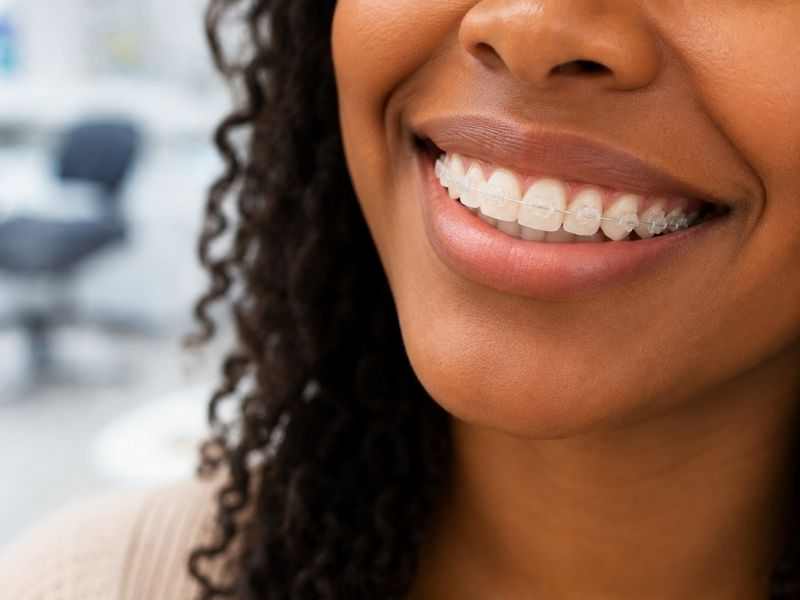
Tooth-colored ceramic brackets blend more closely with the natural color of the teeth.
Ceramic braces use brackets made from a composite material designed to match the natural color of your teeth, or in some cases, a fully clear material that’s nearly invisible from a few feet away, sometimes marketed as clear braces. The wire itself is typically still metal, though some providers offer tooth-colored wire as well. This makes ceramic braces one of the more discreet options, appealing to teens self-conscious about their smile and adults who want straighter teeth without the obvious metalwork of standard, traditional braces.
The tradeoff is durability. The ceramic material is more brittle than metal, so brackets can chip or break under pressure, particularly from hard or sticky foods.
Ceramic options are also more prone to staining over time. The brackets themselves are engineered to resist staining and hold their color for the full course of treatment. However, the elastic ties (ligatures) that hold the wire in place can visibly discolor from coffee, tea, red wine, or curry within weeks, even though they’re replaced at every adjustment.
Metal Braces Fully Explained
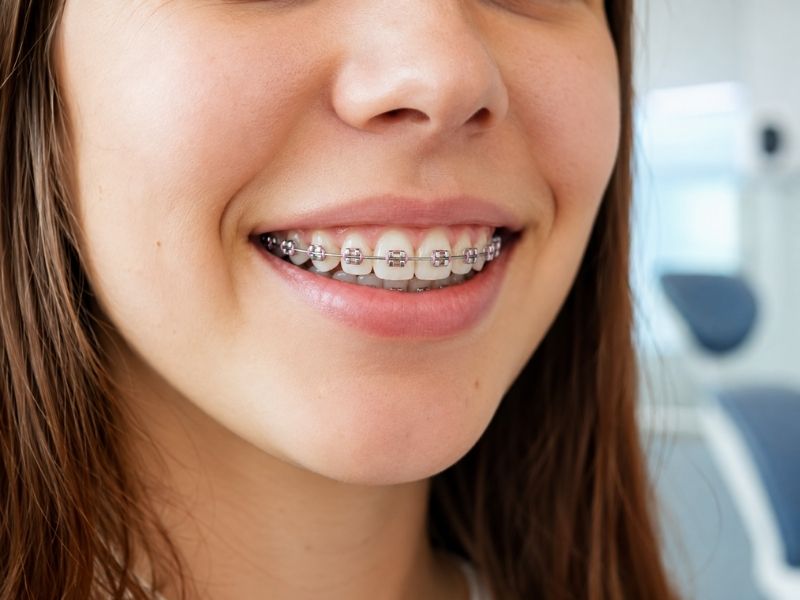
Metal braces are more noticeable than ceramic braces but are typically stronger and more durable.
Metal braces are the option most people picture when they think of orthodontic braces. Brackets are made of stainless steel, connected by a metal archwire and held in place with small elastic bands, often called ligatures, which come in a range of colors.
What metal braces give up in subtlety, they make up for in strength. Stainless steel brackets can handle more pressure without breaking, which means fewer emergency visits for repairs. They’re also the most established option in orthodontics, with decades of clinical use behind the design. For patients who want a straightforward, reliable path to straighter teeth and don’t mind the visible hardware, metal remains a solid, well-tested choice.
Ceramic Braces vs Metal Braces: What Are The Key Differences?
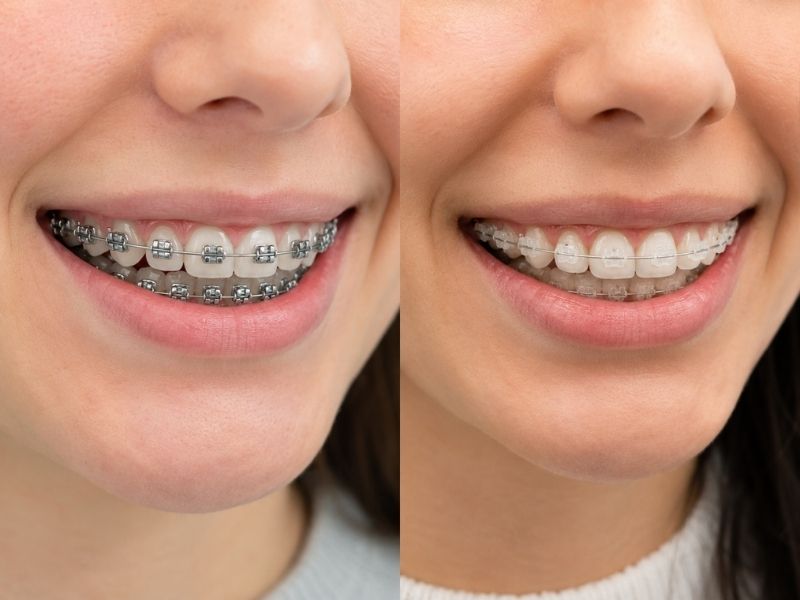
Metal brackets stand out against the teeth, while ceramic brackets are designed to blend in.
Since the mechanics for teeth-straightening are the same, the real decision in ceramic braces vs metal braces comes down to five practical factors: appearance, comfort, cost, durability, and time.
Appearance
This is usually the deciding factor for patients who lean towards ceramic braces. Tooth-colored or clear brackets blend in with your smile, making them far less noticeable in photos and conversation. Metal braces, by contrast, are visible and often show more when smiling widely, since the brackets and wire contrast against your teeth.
For someone who’s self-conscious about how braces look during treatment, the gap between the subtlety of ceramic and the visibility of metal can be the whole decision. If you’re an individual who’d rather personalize colorful metal brackets than hide them, the camouflage ceramic brackets offer doesn’t matter at all.
Comfort
Day to day, ceramic and metal braces feel similar. Both use brackets and wires, so both can cause soreness after adjustments and minor irritation to the inside of the cheeks and lips, especially in the first week or two.
Some patients report that ceramic brackets feel slightly smoother against soft tissue, though this can vary by manufacturer and design. Neither option has a clear, consistent comfort advantage over the other once your mouth adjusts to having braces.
Cost & Budget
Cost is where the two options split most predictably. Metal braces cost less than ceramic in the vast majority of cases, since stainless steel is cheaper to produce and has been the industry standard for far longer. Ceramic braces cost more because the materials themselves cost more to manufacture and the brackets often require more careful handling during treatment.
For patients comparing the best braces options on a budget, that price gap is often the deciding factor. It’s worth asking your orthodontist for a direct price comparison based on your specific treatment plan, since the gap can vary depending on how complex your case is and how long treatment is expected to take.
Durability
Metal braces are more durable than ceramic ones. Stainless steel brackets can handle daily wear, from eating to talking to general jostling, without much risk of damage. Ceramic brackets are more fragile by comparison and can crack or break if bitten down on wrong or exposed to excessive pressure. A broken bracket usually means an unplanned trip back to the orthodontist, which can slow down your overall treatment.
Time
For most patients, treatment takes one to three years, regardless of whether they choose ceramic braces or metal ones.
Ceramic braces can extend the treatment time in cases with frequent bracket breakage. A broken bracket stops applying pressure to that tooth until it’s repaired, so movement at that spot pauses until the next appointment. String enough of those pauses together and treatment runs longer than planned. If speed matters most to you and your case allows for either option, metal braces remove that risk since they’re less prone to breaking in the first place.
Other Teeth-Straightening Options To Consider
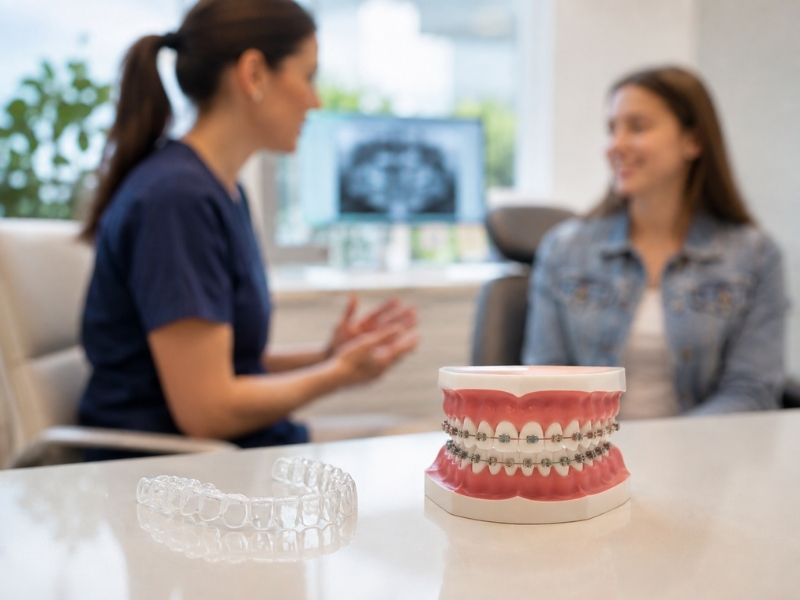
Clear aligners are another teeth-straightening option for some patients who prefer removable treatment.
If neither ceramic nor metal traditional braces feel like the right fit, there are other tooth-straightening options worth exploring.
Invisalign uses a series of custom, removable clear trays instead of the fixed brackets and wires you’d get with traditional wire braces. They’re nearly invisible when worn and can be taken out to eat, brush, and floss, which appeals to a lot of patients who want less visible, less restrictive treatment. For patients weighing invisible braces alternatives to traditional metal or ceramic braces, it’s one of the more established options available. That said, Invisalign tends to work best for mild to moderate cases. More complex bite issues or significant tooth movement often still call for the control that fixed brackets and wires provide, so whether it’s an option at all depends on your specific case, not just your preference.
Lingual braces are a less common alternative also worth knowing about. They work like traditional metal braces, with metal brackets and wires, but are mounted on the back of the teeth instead of the front, which hides them from view almost entirely. In theory, that combines the durability of metal braces with something close to the discretion achieved with ceramic braces. In practice, they tend to cost more than either standard option, can take longer to adjust to, and aren’t offered by every orthodontist, so availability and fit vary more than with traditional ceramic or metal options.
Invisalign and lingual braces don’t remove the ceramic braces vs metal braces tradeoff. They just introduce more complexity to it. Invisalign trades some control for near-invisibility, whereas lingual braces trade cost and adjustment time for full concealment. It is worth having a conversation with your orthodontist about every potential treatment type, since your actual available options depend on your bite, your budget, and what your provider offers.
Choosing Between Ceramic Braces And Metal Braces
Ceramic and metal braces both do the same job: they straighten your teeth and get you to the smile you want. In the end, ceramic braces vs metal braces isn’t a question with a universal right answer, it depends on how much appearance matters to you, what your budget allows, and how much flexibility you want in day-to-day life. A conversation with your orthodontist about your specific case will tell you more than any general comparison can.
At Ortho 99 Plus 1, care starts at $99 a month with no down payment, no records fee, and no credit check. Comprehensive treatment that fits any budget, without the barriers that keep people from getting care they’ve put off for years.
Contact Ortho 99 Plus 1 for a free consultation and find out which option fits your smile and your life.
{{ORTHO_FAQS}}
Key Takeaways: Ceramic Braces vs Metal Braces
- Ceramic braces use tooth-colored or clear brackets that blend in more with your natural teeth. Metal braces use stainless steel brackets and are more visible.
- Metal braces are typically the more affordable dental braces option, while ceramic braces usually cost more due to the materials used.
- Metal braces are more durable day to day, while ceramic brackets are more prone to chipping or breaking, which can add time to treatment if repairs are needed.
- Both options work in a similar timeframe for most patients, though ceramic braces can run slightly longer if brackets need replacing.
- If neither traditional braces nor ceramic appeals to you, clear aligners like Invisalign may be an option you can explore.
Ceramic Braces vs Metal Braces: FAQs
Do ceramic braces stain easily?
Not exactly. The ceramic brackets themselves are engineered to resist staining and hold their tooth-colored or clear appearance for the full course of treatment. The elastic ties that hold the wire in place are the real culprit, they’re a different, more porous material and can visibly discolor from coffee, tea, red wine, or curry within weeks, even though they get swapped out at every adjustment. Normal plaque buildup from inconsistent brushing can also affect how clean your smile looks, which is true with or without braces. However, plaque buildup tends to be more noticeable with ceramic brackets simply because the brackets are tooth-colored, whereas metal brackets don’t show that kind of discoloration against the metal surface.
What type of ceramic material is used in braces?
Ceramic brackets are typically made from polycrystalline alumina, a hardened ceramic material chosen for its tooth-like appearance and its resistance to staining over the course of treatment. It’s more brittle than the stainless steel used in metal braces, which is why ceramic brackets are more prone to chipping or breaking under pressure.
What should I look for in a ceramic braces provider?
Look for a provider with real experience specifically with ceramic braces, not just braces in general, since ceramic brackets require different handling than metal. Ask how they handle bracket repairs if one chips or breaks, since that’s the most common issue with ceramic. It’s also worth checking patient reviews that mention ceramic braces specifically, comfort and results can vary by provider and by case, so a general five-star rating doesn’t tell you much about this particular treatment.
You can see how Ortho 99 Plus 1 patients describe their experience on Google and Rank My Dentist.
Are metal braces more durable than ceramic braces?
Yes. Stainless steel brackets used in metal braces hold up better to daily pressure and are less likely to chip or break compared to ceramic brackets, which is one reason metal remains a popular, reliable choice.
What type of metal is used in braces?
Metal braces use stainless steel brackets, paired with a stainless steel or nickel-titanium archwire. Stainless steel is chosen for its strength and long track record in orthodontic treatment.
About Ortho 99 Plus 1

We're proud to provide expert orthodontic care in a welcoming, family-friendly environment across Jacksonville, FL. Our goal is simple: beautiful, healthy smiles that last a lifetime.
Learn more about usRecent Posts

How Do Braces Work & How Long Do They Take?
August 31, 2026

What Age Do Kids Get Braces?
July 31, 2026

How Does Invisalign Work? What You Need To Know
July 31, 2026

Schedule a Consultation at Ortho 99 Plus 1
At Ortho 99 Plus 1, we are proud to provide orthodontic care that is modern, personalized, and focused on long-term success.
We would love to welcome you in for a consultation and help you take the next step toward a healthier smile.